.svg)
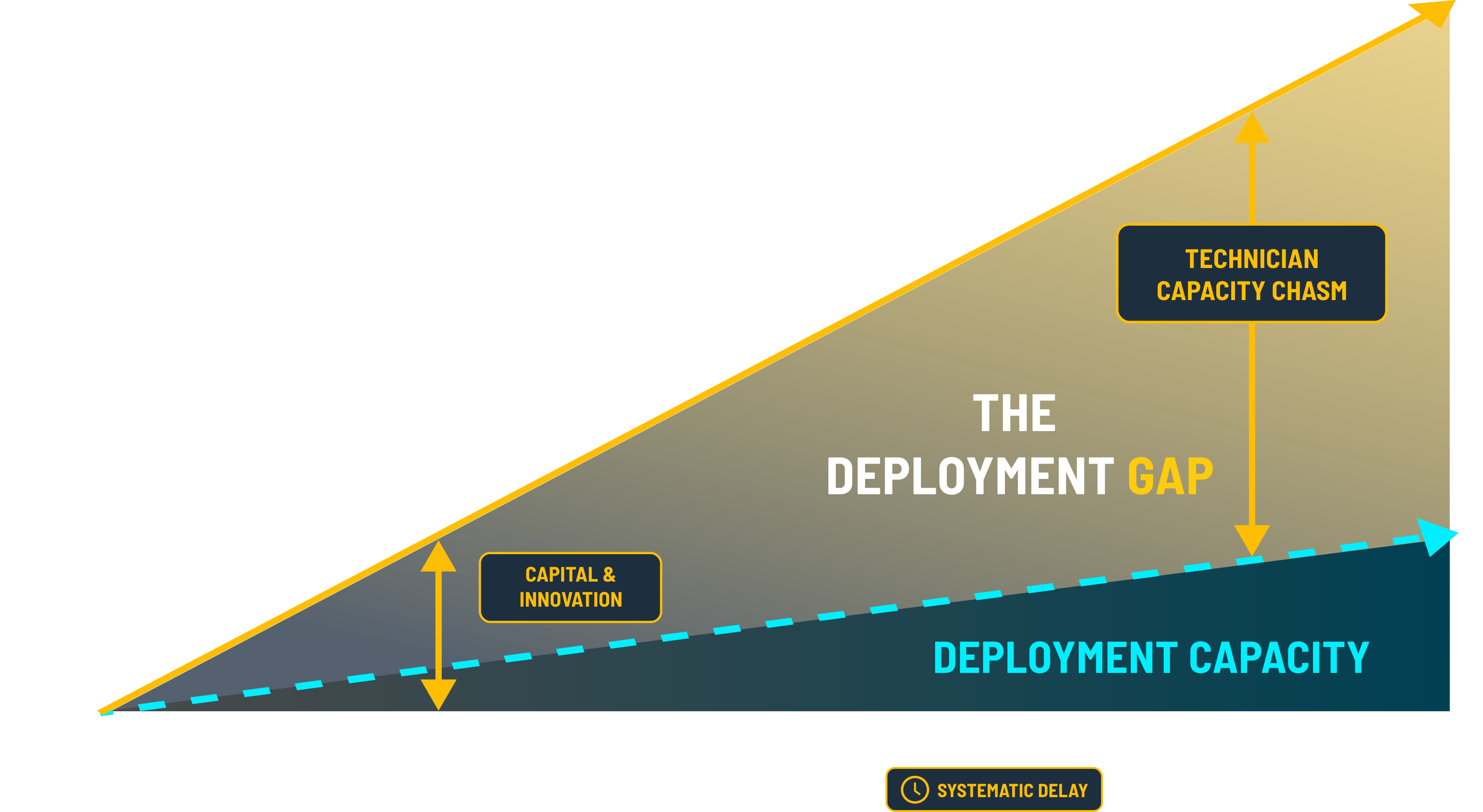
innovation is accelerating.
deployment is not.
why this gap
is structural
As systems fuse, work moves into real-world conditions, complexity requires coordination, sector boundaries break down, and participation becomes start-and-stop across multiple roles, deployment capacity becomes the limiting factor.
the deployment gap
determines operating capacity
When deployment lags, capital sits idle, activation slows, uptime slips, and production is deferred.
It is technician capacity.
- ›The ability to install advanced systems in live conditions
- ›The ability to operate systems at production scale
- ›The ability to maintain and troubleshoot under real conditions
- ›The ability to sustain systems over time at scale
deployment converts demand
into operating capacity
What is needed, where, and when
Formation matched to requirements
Routing capability into roles
Sustained performance in real environments

innovation invents.
technicians deploy.
Operating capacity is created at that point of execution.
Modern economies are not short on ideas. They are increasingly short on people who can close the gap between invention and reliable real-world operation.
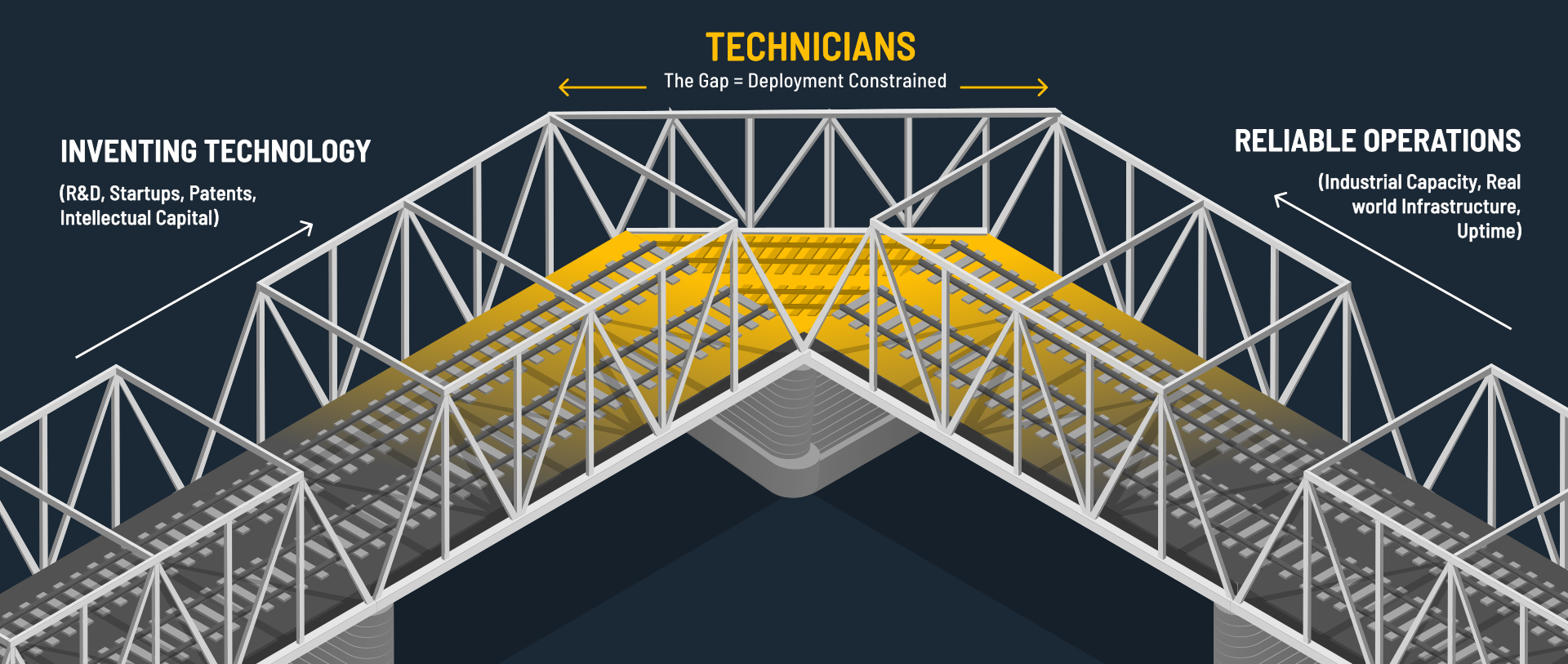
Innovation produces technology. Technicians make technology work.
Capacity
Inventing
Sustaining
Systems at Scale
Technical Talent

"If we don't invest in America's manufacturing workforce, it doesn't matter how much we spend. We will not succeed."
Gina Raimondo · Former U.S. Secretary of CommerceThe constraint has shifted from innovation to deployment, unlocking operating capacity and durable economic mobility.
at the point of deployment.
Technicians act under uncertainty, operate in live environments, and merge physical, automation, and AI systems, where machines and human judgment converge into Skill Capital.
The missing layer is
Coordination.
What does not yet exist at sufficient scale is a coordination layer across them that aligns to the demands of operating capacity
Demand is fragmented. Capability formation is isolated. Technician allocation happens too late.
The result: effort without conversion to operating capacity.
Without coordination, demand does not convert into operating capacity or durable economic mobility. Skills-to-Jobs® is the coordination layer, converting demand into operating capacity and durable economic mobility.
Employer Demand
Demand is defined by companies hiring technicians across regions, often across dozens of facilities and multiple states. For large, multi-site employers, this demand spans states, operations, and production cycles. Roles, volumes, and timing vary continuously with production, expansion, and maintenance needs.
Training Delivery
Capacity is developed across 1,000+ community and technical colleges.Program availability is limited by lab capacity, equipment, instructors, and scheduling, often offered only a few times per year. Waitlists, cancellations, and infrequent lab access further constrain capacity as seen across manufacturing and mechatronics programs nationally.
Current & Future Technicians
Outcomes are realized in operations, where technician availability directly impacts uptime, throughput, and system performance in environments like automated warehouses, production lines, and energy systems. Delays in deployment translate into delayed production, reduced output, and constrained capacity.
Demand is defined across companies that hire technicians and the regions they operate. Capacity is developed across 1,000+ community and technical colleges. Capacity formation is fragmented and often disconnected from deployment. Outcomes are realized in operations.
Layer Already Exists
America’s technician production infrastructure, 1,000+ community and technical colleges, is extensive but uncoordinated, constraining the translation of industry demand into deployable capacity and limiting the formation of operating capacity.
explore full networkTechnician capacity is geographically distributed, but not yet coordinated to match demand.
.png)
what is the
technician economy™

"To be successful in computer chips, we need engineers, but we also need very good technicians to build and run the plants — and the current lack of technicians is a problem."
.jpg)
Each era is defined by a constraining capability.
Factories built the industrial economy. Universities built the knowledge economy. Startups built the innovation economy. Technicians run the systems all three depend on.
demand, capability and deployment
must operate as one
When these components operate independently, conversion slows or fails.
When they operate together, deployment accelerates and capacity is realized.
System performance is determined by how tightly these three variables are aligned in time and place. Demand, capability, and deployment must operate as one.
the scale of the
technician economy™
150+ roles Where Demand Becomes Operating Capacity

where the technician
economy™ is active
Each region converts demand into operating capacity at a different rate, depending on coordination across employers, institutions, and technician deployment.
Georgia’s advanced manufacturing base is expanding rapidly; EV, battery, and industrial systems coming online across the state.
DFW is scaling across aerospace, defense, logistics, data centers and semiconductors simultaneously.
Phoenix anchors one of the largest semiconductor expansions in the country, with new fabs coming online at unprecedented scale.
Home to naval shipbuilding and submarine systems, Hampton Roads operates some of the most complex industrial infrastructure in the world.
New Jersey remains the center of U.S. pharmaceutical and biotech production, with facilities expanding and reshoring accelerating.
CVG is one of the largest air cargo hubs in North America, supporting continuous, high-volume logistics operations.
The New Mexico Engine
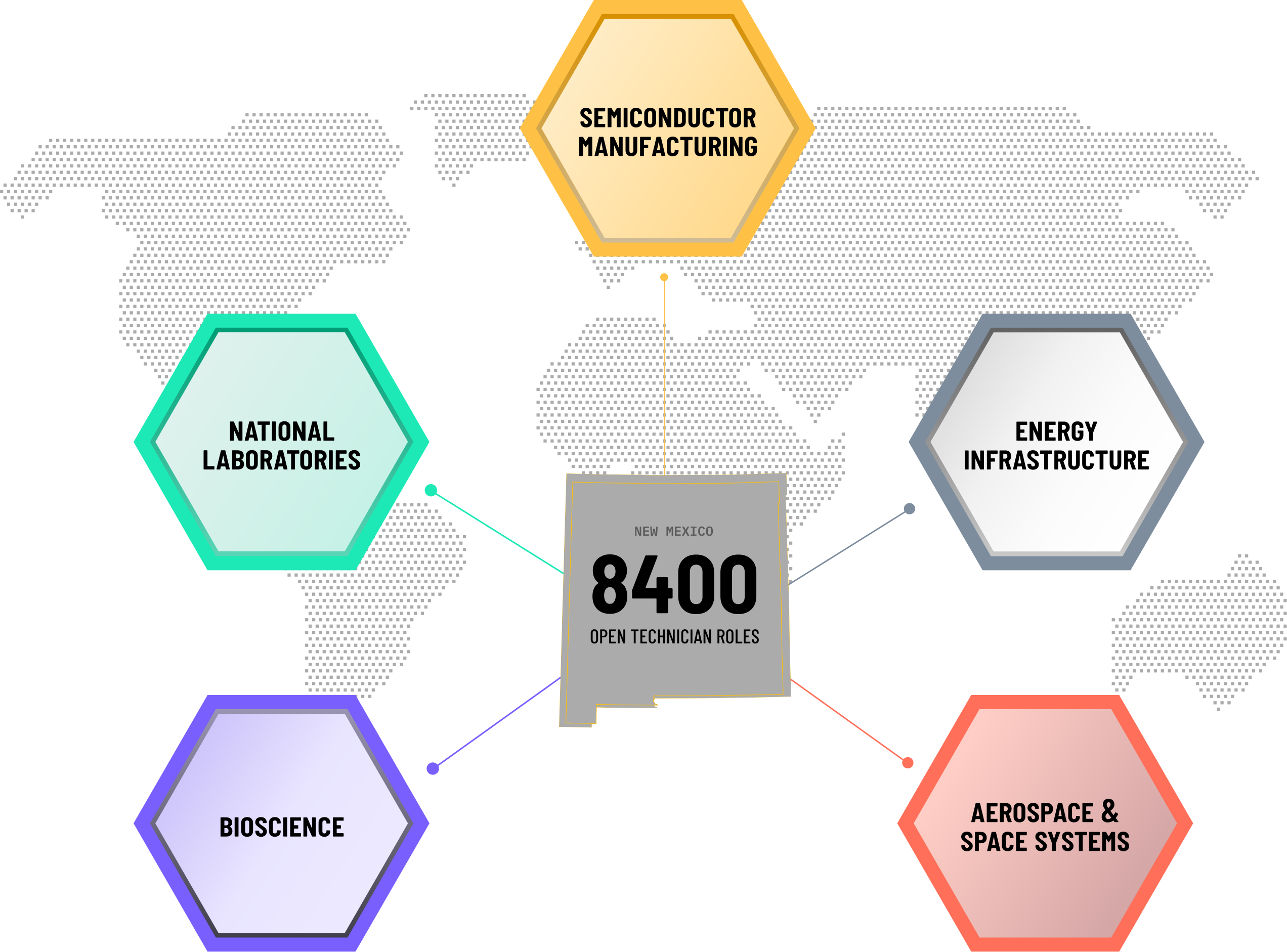
New Mexico concentrates national laboratories, aerospace systems, semiconductors, and energy infrastructure in one region. But none of it operates at scale until it is installed, maintained, and sustained in the real world.
This is where demand becomes operating capacity, or fails to.
(2 of 17 nationwide)
Air Force Research Laboratory
The map of the
technician economy™
Defines the economic framework and connects the four layers, orienting users before they enter through a specific pathway.
.svg)
Technicians of Tomorrow™
A national platform led by the Technician Economy Futures Council, bringing together leading colleges and employers, to define how technician capacity is formed, deployed, and scaled
For: industry leaders, community and technical colleges, government, philanthropy, and
partners shaping economic systems
Why it exists: To define, test, and evolve the frameworks that determine how the United States converts demand into operating capacity and durable economic mobility.

Technicians of America™
Explore technician roles, technician paths, and demand by state, what jobs are available, where they are, and how to access them.
For: current and future technicians, working learners, manufacturers, government, regional leaders, and industry partners.
Why it exists: To make technician opportunity visible and actionable.

Manufacturing america™
Explore manufacturing jobs, employers, and state-level activity, and engage as a technician, employer, or partner in the manufacturing sector.
For: Current and future technicians, working learners, manufacturers, government, regional leaders, and industry partners.
Why it exists: To organize and strengthen the manufacturing ecosystem.

Skills-to-Jobs®
Unmudl is the technician gateway to skill paths, creds, and jobs. Access aligned skill paths, credentialing, and connect directly to technician jobs through the Skills-to-Jobs® network.
For: Current and future technicians, working learners, job seekers, employers, and community and technical colleges.
Why it exists: To convert intention into technician hires.

Techs of Tomorrow™
A place to hear directly from employers, understand technician roles, and see how individuals become eligible for jobs.
For: Current and future technicians and working learners.
Why it exists: To connect individuals directly with employers and real job opportunities.
Technician
Capacity Index™
A composite indicator measuring how effectively regions convert demand into operating capacity, tracking where deployment throughput is constrained.
Explore the TCI index →The language of the
operating system
Every term in the Technician Economy™ has a precise definition. Understanding the vocabulary is how you understand the system and how you talk about it with precision.
eight entry points
into the economy
Explore roles and pathways that lead to participation in industrial systems.
Access aligned Skill Paths™ that convert demand into deployable capability.
Deliver aligned Skill Paths™ that convert demand into operating capacity.
Aggregate and coordinate demand across roles, regions, and systems.
Access real-time demand signals across regions, roles, and systems.
Understand how deployment and technician capacity shape regional economies.
Invest in coordination infrastructure that converts demand into operating capacity.
Analyze how deployment converts demand into operating capacity and economic outcomes.
take action
The constraint is clear. The system is defined. The coordination layer exists. Now the work is to expand deployment capacity.
Get skills. Get credentials. Get hired. Find affordable, employer-aligned skill paths through community and technical colleges on Unmudl.
Browse the national technician role library: 100+ roles across manufacturing, energy, defense, logistics, semiconductors, and pharma.
Share your perspective on workforce development, technician deployment, or regional economic strategy. We review every submission.
Explore technician roles, technician paths and demand across the US.
Explore manufacturing technician jobs, employers by regions.
Define the future of the Technician Economy™.
The complete Technician Economy framework™: the Equation, core concepts, regional dynamics, and 90-day launch roadmap.
Measure your technician pipeline value, coordinate hiring demand, and connect with the workforce infrastructure built for industrial employers.
Share your perspective on workforce development, technician deployment, or regional economic strategy. We review every submission.
Know a national leader from industry or community and technical colleges? Nominate them for the Technician Economy Futures Council™.
Connect with college-trained technicians ready to work. Unmudl's Skills-To-Jobs® marketplace lets employers post hiring demand and access a pipeline of job-ready technical talent.
Tell us which roles, regions, and volumes you need. Demand signals improve visibility across the system and accelerate coordination.
Community and technical colleges are the backbone of technician development. Connect your institution to the Skills-to-Jobs® network.
Share your perspective on workforce development, technician deployment, or regional economic strategy. We review every submission.
The complete Technician Economy framework™: the Equation, core concepts, regional dynamics, and 90-day launch roadmap.
Know a national leader from industry or community and technical colleges? Nominate them for the Technician Economy Futures Council™.
Connect regional employers, colleges, and partners to build a coordinated technician system in your area.
Know a national leader from industry or community and technical colleges? Nominate them for the Technician Economy Futures Council™.
The complete Technician Economy framework™: the Equation, core concepts, regional dynamics, and 90-day launch roadmap.
Share your perspective on workforce development, technician deployment, or regional economic strategy. We review every submission.
where the Technician
economy™ launches
Official announcement and launch of the NM Marketplace. Public launch of the Technician Economy™ framework in New Mexico, hosted with Innovate+ Educate.
Hosted at TSTC – Williamson County campus
Parminder chairing alongside Kris R, Matt Lee, Tracy & Amy.
Co-hosted with TSTC and BlueForge Alliance
Public launch of ManufacturingDFW.org. Technician Roundtable to follow for those interested.
One-year anniversary milestone for Manufacturing GA, paired with a Technician Roundtable. June 22–25.
Ohio launch roundtable hosted with the Northern Kentucky Chamber. AMZN Prime Air tour in the afternoon.
Kentucky and Indiana regional roundtable in Louisville, coordinated with Amatrol and UPS.
MEX Presence and market launch event, expanding the Technician Economy™ framework into Mexico.
the technician economy™
blog
Have a perspective to share on technician workforce development, deployment, building industrial capacity, or accelerating economic mobility?
Submit a completed blog or an idea & join the Technician Economy™ conversation
sUBMIT a
blog idea
The Technician Economy™ is built by practitioners. If you have a perspective on workforce development, technician deployment, industrial capacity, or regional economic strategy, we want to hear it. Submit a blog and we'll review it for publication.